Game design,
programming,
deep learning
Welcome to my portfolio page! My name is Javier Roldán Botías. I am a graduated game designer and programmer with a Master’s degree in deep learning. I love playing and creating videogames.
Individual work
How videogames can be used to intensify horror
experiences via universalization and personalization



Overview

Objectives

Specs

Results



Horror and Personalization
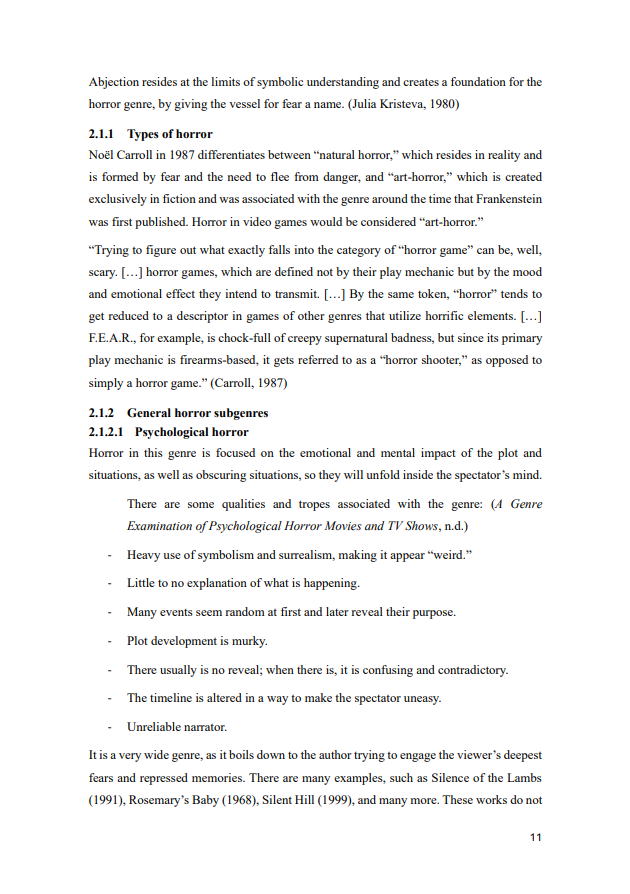
Have you ever gone out to see a movie with friends? Have they cried and shrieked as you remained unfazed, or vice-versa? This happened to me once. When I was little, my father swore that The Exorcist was one of the scariest movies ever made. Watched it, nothing. Keep in mind that this was the same me that couldn´t sleep for weeks after watching Gremlins, so why does this happen? 𝐖𝐡𝐲 𝐢𝐬 𝐡𝐨𝐫𝐫𝐨𝐫 𝐬𝐜𝐚𝐫𝐲 𝒔𝒐𝒎𝒆𝒕𝒊𝒎𝒆𝒔? 𝐂𝐚𝐧 𝐚 𝐡𝐨𝐫𝐫𝐨𝐫 𝐭𝐡𝐚𝐭 𝐬𝐜𝐚𝐫𝐞𝐬 𝐞𝐯𝐞𝐫𝐲𝐛𝐨𝐝𝐲 𝐞𝐱𝐢𝐬𝐭?
For my bachelor’s degree project, I wrote the paper: “𝘏𝘰𝘸 𝘷𝘪𝘥𝘦𝘰𝘨𝘢𝘮𝘦𝘴 𝘤𝘢𝘯 𝘣𝘦 𝘶𝘴𝘦𝘥 𝘵𝘰 𝘪𝘯𝘵𝘦𝘯𝘴𝘪𝘧𝘺 𝘩𝘰𝘳𝘳𝘰𝘳 𝘦𝘹𝘱𝘦𝘳𝘪𝘦𝘯𝘤𝘦𝘴 𝘷𝘪𝘢 𝘶𝘯𝘪𝘷𝘦𝘳𝘴𝘢𝘭𝘪𝘻𝘢𝘵𝘪𝘰𝘯 𝘢𝘯𝘥 𝘱𝘦𝘳𝘴𝘰𝘯𝘢𝘭𝘪𝘻𝘢𝘵𝘪𝘰𝘯”. The main objective of the work was to determine the plausibility of the aforementioned horror that scares everybody. For this, I divided the main horror genres into their main aspects. For example, blood and viscera for gore, unexplainable fear for cosmic horror and diokophobia (fear of being chased) for slashers. The effects caused on people were then measured using non-invasive methods. The experimentation was used to determine if what scares someone could be predicted. A score was calculated to anticipate which of six selected games would cause the most intense reaction.
Ultimately, the model for videogame use proved to be possible, as the fear response can be accurately measured with a simple survey that could be found at any point of an experience. Universal horrors could be even more specific with the many users that come with a videogame product. The data could be used similarly to the personalization model, with general templates that provide the groundwork for further modifications. The horror categories that create more enjoyable experiences and those external to the horror genre proved to be more difficult to measure, although almost no individual enjoyed the one that caused the highest distress the most.
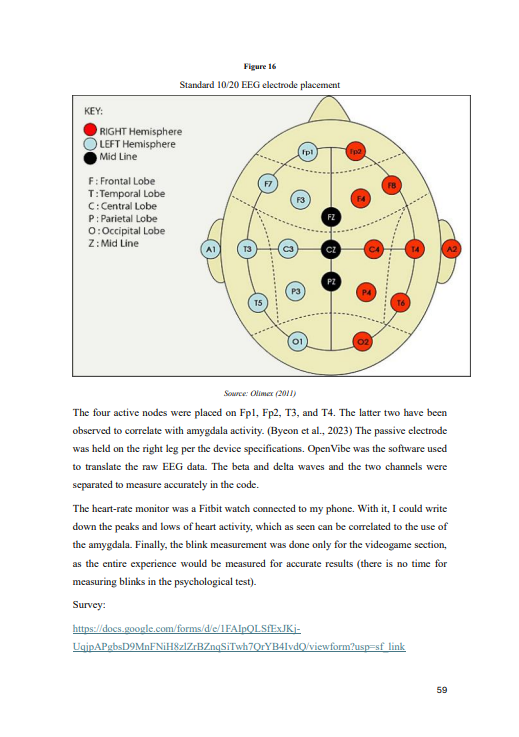
The rig used for the measurements included a 4 channel electroencephalogram (EEG-SMT), a FitBit watch for heart rate monitoring and a camera for blinks. The software used was OpenVibe, detecting beta and delta waves.
For the experimentation, I required a non-expensive method of identifying the fear response, as it could be used in future lines of investigation. The EEG-SMT and the inexpensive setup with household items were perfect for the testing, as they use already established technology to push the boundaries of videogame personalization. The survey was essential to see how generalized horror worked and revealed fears that hadn’t even registered for me at first, like insects and clowns.
How videogames can be used to intensify horror
experiences via universalization and personalization
Overview
Problems
Final model
Conclusion
Videogame testing automatization
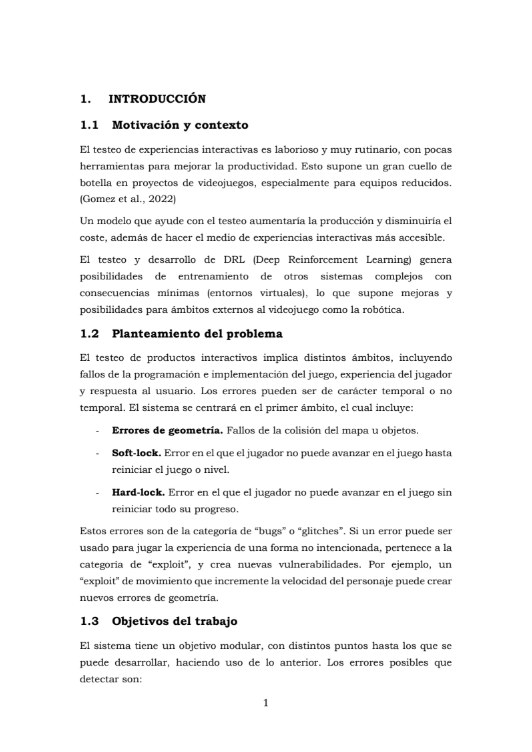
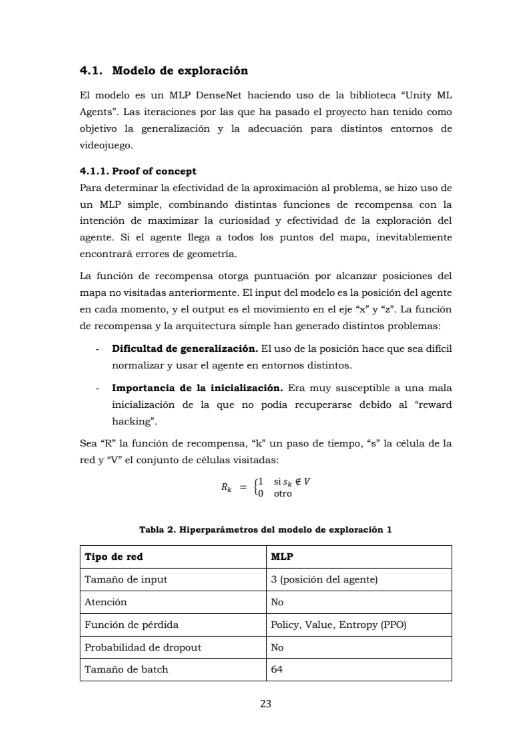
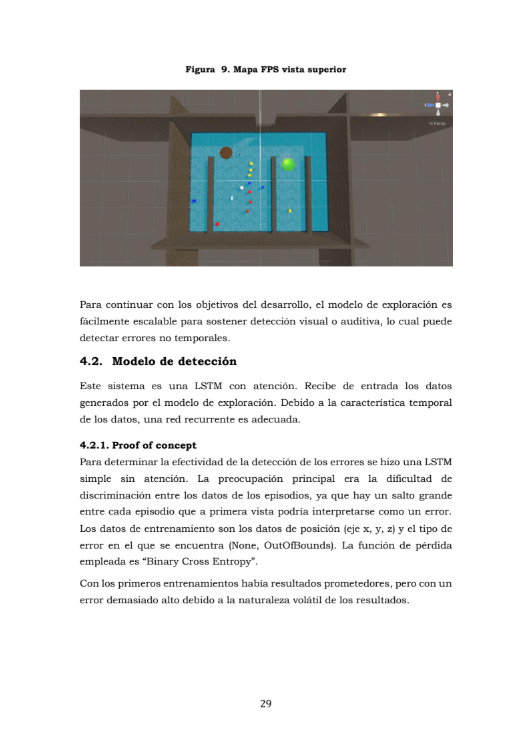
Video game testing is a bottleneck. If you are a developer, you’ve probably had to wait for new mechanics, geometry, code and AI (NPCs) to be tested. Spending hours on a single bug is not an uncommon experience. This tedious work can be sped up significantly by using a 𝘋𝘦𝘦𝘱 𝘙𝘦𝘪𝘯𝘧𝘰𝘳𝘤𝘦𝘮𝘦𝘯𝘵 𝘓𝘦𝘢𝘳𝘯𝘪𝘯𝘨 𝘢𝘨𝘦𝘯𝘵, which can interact with your specific environment to find bugs. This is exactly what I developed in my paper: 𝘈𝘶𝘵𝘰𝘮𝘢𝘵𝘪𝘤 𝘋𝘦𝘵𝘦𝘤𝘵𝘪𝘰𝘯 𝘰𝘧 𝘉𝘶𝘨𝘴 𝘪𝘯 𝘝𝘪𝘥𝘦𝘰𝘨𝘢𝘮𝘦𝘴 𝘣𝘺 𝘙𝘦𝘪𝘯𝘧𝘰𝘳𝘤𝘦𝘮𝘦𝘯𝘵 𝘓𝘦𝘢𝘳𝘯𝘪𝘯𝘨 𝘸𝘪𝘵𝘩 𝘐𝘯𝘵𝘳𝘪𝘯𝘴𝘪𝘤 𝘊𝘶𝘳𝘪𝘰𝘴𝘪𝘵𝘺 𝘢𝘯𝘥 𝘛𝘦𝘮𝘱𝘰𝘳𝘢𝘭 𝘈𝘯𝘢𝘭𝘺𝘴𝘪𝘴 𝘸𝘪𝘵𝘩 𝘓𝘚𝘛𝘔.
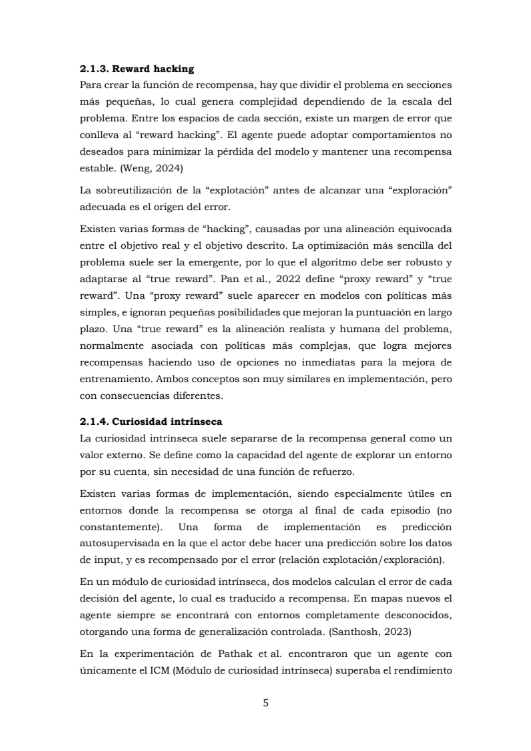
The unique training environment makes reinforcement learning possible, in which instead of finding a structured function in a dataset, the objective is to optimize an extrinsic reward function crafted by the developer. This approach is much more similar to how human learning works, as the agent has to interact with the environment. Intrinsic curiosity works in parallel with the extrinsic reward function, as it rewards the agent for taking actions that are innovative, making it easier to generalize and less prone to “reward hacking”.
The final agent is an LSTM neural network, making it very lightweight. It was tested on three different maps with similar mechanics, and a final map in a different project with different mechanics and movement values. The input received by the agent was a normalized array of raycasts to determine the distance to each point in the map.
The agent data (position, distance to each raycast) is passed through another LSTM to find the bugs in the temporal context. These bugs are registered to a coordinate (x,y,z) inside the environment to flag the error. As it is 𝘵𝘦𝘮𝘱𝘰𝘳𝘢𝘭 data, the bugs that can be found are restricted to 𝘵𝘦𝘮𝘱𝘰𝘳𝘢𝘭 errors, which include: map bounds, geometry errors and value errors (like velocity).
Many different maps were used for the testing and training, including 3d maps with no verticality, some with verticality and an external project to test and train the final model, with more complex inputs, different movement values and scale. The different models and hyperparameters were tested on the maps to determine the most effective ones.
Videogame errors are very varied and can exist beyond temporal values, like textures and visual bugs, and parameter errors. The experimentation proved effective on temporal bugs, which were the main focus and can be easily detectable with an LSTM. Many other methods can be used to find errors, but this one is lightweight and effective, making for easy testing and shorter sessions.
Group work
Skate Summit

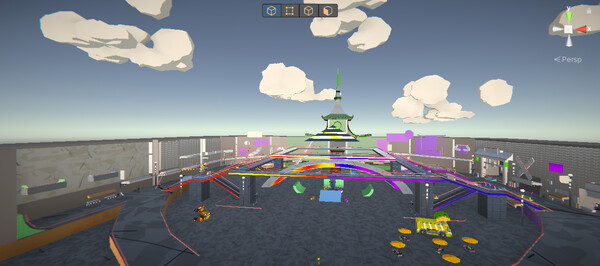
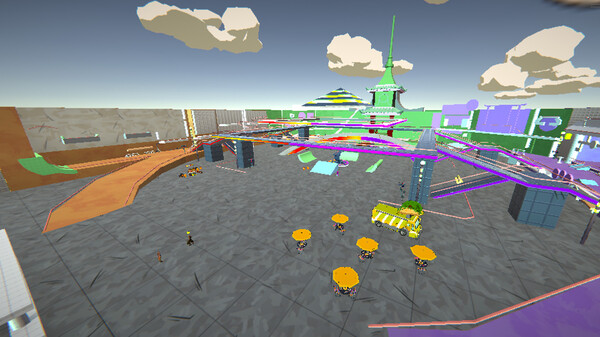
A platforming skate game with a nostalgic touch. A game packed with skate mechanics, without the overwhelming simulator commands, set in a cyberpunk world with retro vibes. Jump, grind, hit half-pipes, or go wild doing tricks!
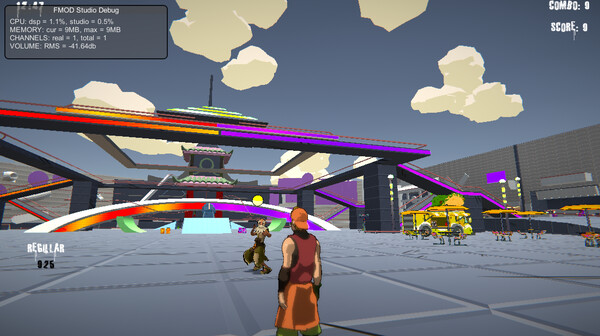
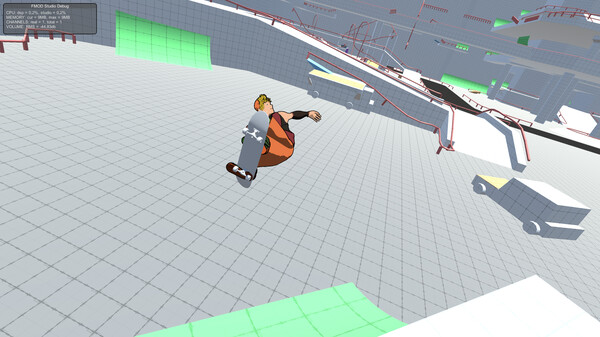
Responsibilities:
- UI/UX Design and implementation
- Mission design and implementation
- Narrative designer
- General programming